
Overview:
British Columbia is geographically-large, but relatively sparse in its distribution of populated areas. The presence and capability of communication infrastructure generally scales alongside population centers. Between these centres are relay systems, effectively creating an overall communications grid that resembles the power grid.
In the 2020s, telephone cable networks on poles have largely been replaced by fibre optic networks, which are typically under ground (at least in urban areas). These fibre optic networks are the primary grid for most non-satellite based communications, including home phone lines, cellular, and any other digital network. In other words, most communications are internet-based communications.
Cellular Network:
Cellular communications are the most relied upon method of communication in BC; pretty much everybody has a cellphone. These days, most areas of BC that are near municipalities or populated areas along highways should have cellular coverage, especially in the lower half of the province (Prince George being the midpoint). However, it is possible to find yourself without a cellular connection should you go off onto a backroad and into the bush.
Cellular, and radio towers in general, require line of sight for reliable transmissions; so when you have forests and mountains blocking this line of sight, then you can possibly lose signal. That being said, some newer cellphone models have the capability to send text messages via satellite. This would be invaluable in an emergency scenario, essentially rendering devices like Spot SOS and satellite phones obsolete if you can send a text message with GPS coordinates and a description of the emergency.
Cellphones are also capable of receiving emergency messages from emergency management agencies. These can range from Amber Alerts to extreme weather warnings, and probably events related to terrorism/warfare.
Cellular communications are especially vulnerable in emergency scenarios like natural disasters or military/cyber attacks. There have been various examples of emergency events where cellular networks were disabled, leaving even emergency responders scrambling to establish alternative communications. This happened in Tumbler Ridge due to a wildfire in 2025, here is a statement made by the RCMP at the time (CKPG):
“The Tumbler Ridge fibre optic has been destroyed by fire and all telephone, cell phone, radio, and internet connections are unavailable”
Satellite Network:
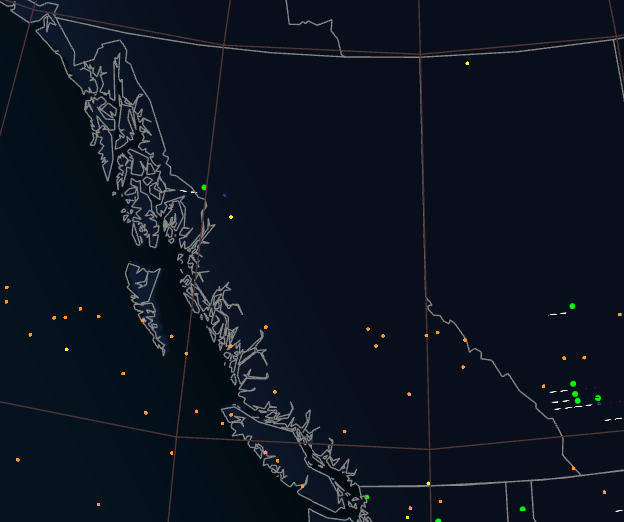
Over the last decade, various satellite internet providers have arrived on the Canadian market. Xplorenet was the first prominent provider, but was quickly overtaken by Starlink when it entered the market in late 2020. It did not take long for people to figure out that you can bolt a Starlink dish to a vehicle and use WiFi calling virtually anywhere. This is extremely common to see in remote industrial projects. Starlink has proven to be an extremely useful communication tool that can bypass the communications grid, and remain operational during emergencies.
However, there are drawbacks to Starlink. The price and quality of the dish has vastly improved over the last half a decade, but the monthly cost is still relatively high ($70 for the cheapest residential option, $189 for unlimited roaming). You have to register the equipment in your name, so ideally you would want it set up and working before any emergency. It is run by SpaceX, which is an American firm headed by an eccentric billionaire, so it is subject to the pitfalls of American politics. It is also subject to Canadian regulations and can probably be disabled by regulators in extreme circumstances. It will also give away your position at all times like a cellphone, if you are concerned about those kinds of things. And lastly, it only has reliable coverage up to about the halfway point of BC (Prince George, Prince Rupert, Jasper, etc.).
Radio Technology:
Radio communications will always be a reliable tool for communications, especially when out of cellular range or during emergences. The caveat is that there are many nuances to radio technology and regulations, all of which need to be considered and prepared before the time comes to actually use it.
Local Radio (one-way):
The most basic form of radio communications are one-way receivers, like a car or portable radio. Most of these radios will receive AM and/or FM transmissions:
- FM radio stations typically operate locally, based out of a local station that uses a repeater network to amplify its signal to the surrounding region. FM channels tend to be variety channels, usually music stations that have live hosts and news blocks at regular times of the day. In an emergency scenario, FM stations can be operated independently from the overall grid, as long as the repeater network is operational. FM stations would also be a likely source of emergency updates from local officials, especially directives from municipal leadership (like evacuation orders).
- AM radio stations typically operate from remote stations over vast distances, using atmospheric propagation to send indirect transmissions. This is why you can still listen to AM channels even deep in the woods. CBC is the primary AM station in British Columbia, with its main station being located in Vancouver. CBC, being a federal government agency, is a key vector for information from provincial and federal government in the event of emergencies. It is probably the most reliable transmission of media communication during a local event.
It is possible to receive channels hosting the nightly Coast-to-Coast AM show (22:00 PST) on AM channels in remote locations in BC. This is a 4-hour variety talk show focused around conspiracy or paranormal type discussions, and usually begins with a recap of current global events. This show has been around for decades and is a staple of trucker culture.
Satellite Radio (one-way):
Satellite radio systems like Sirius XM are likely to remain operational during local events. There are few Canadian channels on there, and probably no BC-based channels, although CBC does have XM channels. There are many American news talk shows. This is a service based out of the USA, so it could be limited by Canada-US relations. The most important channel in terms of preparedness information is Road Dog Trucking (Ch146); as a trucking channel, it provides updates on issues affecting logistics and economics across North America. Road Dog also hosts Coast-to-Coast AM, as described above.
Many modern vehicles have Sirius XM receivers built into their radio systems, so it is designed to be listened to while mobile. It is also fully possible to rig a portable setup for camping or other remote activities; all you need is Sirius home equipment, a speaker and a power source, such as a solar generator. The downside is that you need to maintain a paid subscription assigned to the radio unit, but this can cost as little as $5/CAD per month.
Analogue Radio (two-way):
This is the most conventional form of two-way wireless communications. This type of communication is also heavily regulated, especially by Industry Canada/ISED. You are expected to follow the regulations and procedures, even during extreme emergencies. This is why it is important to acquire this knowledge and experience before you ever find yourself in that situation.
The most basic form of two-way analogue radios is the typical walkie-talkie. You can buy these anywhere; they often come in pairs and can be used right out of the box without any training or certification. These radios are pre-programmed with public-use channels on UHF bands, known as FRS/GMRS channels. These radios are low-power and have a range of only a couple of kilometers.
The next level up are the business-grade radios you would typically find on job sites. These can be handheld or bolted into a vehicle. The can also transmit on UHF (optimal for urban) or VHF (optimal for rural). These would be pre-programmed for the client with licensed channels, with permits issued to radios meeting ISED specs. Handheld radios of this type often have no screen and are functionally little different than walkie-talkies; these are the kinds of radios that laypeople would be trust with, like security guards. Mobile stations tend to have a screen because they would be loaded with many channels for off-road and company-based communication, namely RR, LD and LAAD channels. Individuals can also obtain these same radios and obtain similar permits; this is useful for independent contractors, or people who spend a lot of time on backroads (that require radio calls so traffic can be aware of hazards).
The next tier is HAM/amateur radio. At this tier, you can personally possess radios that can transmit on a wide array of frequencies. This is more or less full-spectrum wireless communication, depending on your skillset and equipment. You can become independent from the communications grid, and also communicate in independent networks.
Amateur radio is a complex topic and cannot be fully defined in the scope of this article, but it is highly recommended to learn the basics and obtain at least a Basic Amateur Radio Certificate from ISED; this certification is essentially a license to transmit (you do not require a listen to listen or scan). Such amateur certification is good for life, so you should probably just get it in case restrictions are placed on obtaining it in the future. You can also obtain morse code certification and the Advanced Amateur Certificate, which allows you to do things like build and operate repeaters.
This certification is obtained after completing an exam, which is not particularly easy; it is advisable that you take a course on this subject. There are amateur clubs that occasionally offer these courses, which can range from days to weeks long. Some of these clubs even offer casual online courses, such as the Surrey Amateur Radio Club. You have to take the exam in person with a credited examiner; this will likely be a representative from your local HAM club. This gives you an opportunity to at least meet the people running the local HAM clubs. You do not have to necessarily participate with the HAM club itself, but you should be familiar with their practices and repeater stations because these HAM clubs are the providers of backup communication networks during emergencies where primary lines of communications fail.
And by the way, it is called “amateur” radio because it is a free service. It does not mean that amateur radios are not the most competent radio people out there.
Digital Radio (two-way):
Digital radio networks are becoming normalized now, mostly because they can provide a secure line of communication, much like a phone call. Digital radio comms are encrypted, which is why emergency responders like RCMP have switched to digital radios; in the olden days, one could easily eavesdrop on these communications with a basic radio scanner.
Amateur radio operators also often have a digital radio, because no true amateur radio operator has only just one radio. Digital radios are often much more advanced machines than analogue radios, and offer more features and capabilities (like a smartphone vs flip phone). Digital radios can also transmit on analogue networks as well. In fact, for a mobile operator, the ideal radio would be a handheld digital radio that is licensed for off-road communication.
There are three downsides to digital radios:
- They are prohibitively expensive. The lower-end ones will probably cost upwards of a $1000 CAD if you include additional licensing fees, batteries, antennas and other accessories.
- They operate on cellular networks. So digital radio communications would be just as disabled as cellphones, aside from using analogue frequencies.
- In case of armed conflict or warfare, using encrypted digital communications is well known to be extremely hazardous for the operator, and often expressly forbidden in modern combat (ie., Ukraine).
Mesh Networks (multi-way):
A new type of communication network is emerging on the market, known as mesh networks. These are designed for non-grid, community communications. Essentially it is a network of small radio transmitters that can send text messages while also acting as repeaters for other mesh transmitters; so the more mesh transmitters you have, the more functional the network will be.
SDR – Software Defined Radio (scanner):
Software Defined Radio is essentially a modern scanner technology. Its main advantage is that it can use software to automatically tune frequencies, as opposed to needing a room full of equipment, and it is far easier to find and observe transmissions, especially with visualizations. With SDR, it is possible to observe transmissions from a wide array of spectrums and sources, including from aircraft and maritime craft, and even radio-controlled sources like drones.
It is a learning curve to learn how to use this technology, but it is relatively inexpensive. SDR kits look like a USB flashdrive, except they have an adapter that connects to an external antenna. SDR is virtually designed for mobile use, and all you really need is a laptop and an antenna to use it anywhere.
Practical Tips
Get Your Basic Amateur Operator Certification
As mentioned earlier, your basic amateur/HAM certification is good for life in Canada. You are required to have it, along with your operator code and the following of protocols as long as the bureaucracy exists.
It is highly recommended to take a course from a HAM club. The exam is somewhat difficult and requires an understanding of not just the technical aspects, but also Canadian regulations. And if nothing else, taking the course and/or completing the exam will provide a greater understanding of how radios work.
Obtain Several Radios (of different types for different purposes)
The first HAM radios you should get are cheap ones to experiment with. The Baofeng UV-5R is the classic cheap radio, although it is now obsolete thanks to other cheap models like the Quansheng UV-K6. All of these cheap HAM radios are produced in China, and you’re better off ordering them directly from Alibaba. Usually these radios come in pairs. The problem with these radios is that they are not regulated for useful channels (like for backroads), so you cannot register them for such use with ISEC.
You should invest in a quality handheld radio, preferably a digital radio. This will be costly, so make sure that the radio is certified for important channels with the ISEC database. It is probably better to just get a radio store to do the registration paperwork for you. Registration has an annual bill.
The other type of common radio is the mobile style, typically found strapped in vehicles. These are common in industrial or logistic operations. You use a handheld mic to talk into it. This same type of radio can also be used for a static base station. You really just need a power source and an antenna for basic operation.
Quality radios, like the ICOMM brand, are expensive. You can buy used radios in the second-hand market and register them in your name. However, quality may vary.
Get the Right Antenna
Antennas are both a simple and complicated subject. There are a lot of fancy antennas in the market that are unnecessary. However, there are also a lot of counterfeit or otherwise useless antennas too.
The basic antenna that comes with radios should be at least functional. Sometimes, they are referred to as “dummy” antennas, which are antennas that essentially don’t transmit anything very far (or at all)- these are useful when testing your radio. You should never try to transmit anything without an antenna attached to your radio, or it can fry the components.
The main thing to know about antennas is that quality antennas are tuned for certain frequencies; the more fine tuned the antenna, the clearer the transmission, but it will be less capable on other frequencies. Generally, you just need to decide on a VHF or UHF antenna. VHF is generally used for rural applications, UHF for urban.
The range of the transmission typically depends on the size of the antenna or the power output of the radio. This is why radios have power restrictions in the regulations, especially for walkie-talkie frequencies. For most applications, the typical Nagoya NA-771 antenna is the best budget choice. If you have a need for short-range communications, there are snubby antennas for that.
There are many other antenna configurations out there. If you do a lot of backpacking in the woods, it is recommended to get an extension adapter that can mount an antenna to the top of your backpack, for instance. Things like this are important to consider because your body can interfere with radio reception, so you would ideally want the antenna to be located away from the body.
Obtain Acessories
There are many accessories worth investing in, particularly in regard to powering the radio. You should always have multiple battery packs ready to go for mobile radios. There are rechargeable battery packs of different sizes, and sometimes of different quality or type (some perform better in cold conditions, for instance). There are also battery pack adapters that use AA/AAA batteries. There are also battery pack “eliminators” that basically connect the same way as a battery pack, but also connect to an external power source (with a DC input). There are recharger base stations that can also act as AC input.
It is also worth thinking about getting a quality holster for your radio. Some radios could also benefit from some kind of impact armor (rubber or 3D printer styles are common). In some scenarios, especially if using a handheld radio while driving, it would be advantageous to install a radio holder and use a handheld mic.
Learn Radio Programming
It is important to know how to program your own radios, or at least just how to upload channels to them. This requires some computer knowhow, but is not overly complicated. Technically, you are not supposed to modify the channel list on your registered radio, so this applies for receive-only HAM radios used for fun.
This can be done with any computer, as long as you have a data cable for the radio. For instance, Baofeng and Quansheng radios use a USB to Kenwood-style data cable. CHIRP is the typical software used for this process.
What you are really doing is creating your own database of channels in a spreadsheet, which you then use CHIRP to upload onto the radio. You can tune to channels and save them manually on your radio, but this process does it much more efficiently. It also allows you to easily clone radios, which is useful if you have a network of people and you intend to communicate on the same channels (such as on amateur frequencies or repeaters).
It is generally legal to receive and listen to any transmission being broadcasted. It is possible to, for instance, program a radio with many official channels while setting those channels to be receive-only, for scanning purposes. There are online resources with useful frequencies out there, such as the RRDB.
For more advanced users, there is a rabbit hole of applications beyond just custom channel lists. Newer radios can have custom firmware installed with all kinds of useful applications, like frequency spectrum scanners that can detect ambient radio transmissions, or unlocking restricted channels. There are a lot of regulations regarding this activity, so it is highly recommended to educate yourself and never engage in any activity you do not understand.
Practice Using Radios
Now that you have working radios, you should practice with them. The ideal situation is if you know other people in the same situation, such as others with amateur operator certification. This is how you can effectively engage in amateur radio comms, getting used to talking on the radio and following protocols.
There is a thing called a “net”, which is essentially a rendezvous for amateur operators (usually for club members but not always). This rendezvous will typically include a specific time of the day and frequency, and occurs weekly or monthly. If you are inexperienced, figure out the net for your local club and listen in when they do their meeting to get a general idea for how it all works. Clubs typically use repeaters, which use a receiver station (that you transmit to), and a second transmit station (that you receive from); this is why modern radios usually display two frequencies at once, where one is for listening and the other is for transmitting.
You could also consider having two radios going at once, where one is your primary transceiver, while the other is designated as a receive-only scanner.
Citations
Created January 26 2026